


When to See the Vet: 10 Signs It’s Time for a Checkup
November 11, 2025
Planning a Trip Here’s How to Prepare Your Pet for Boarding or Pet Sitting
December 14, 2025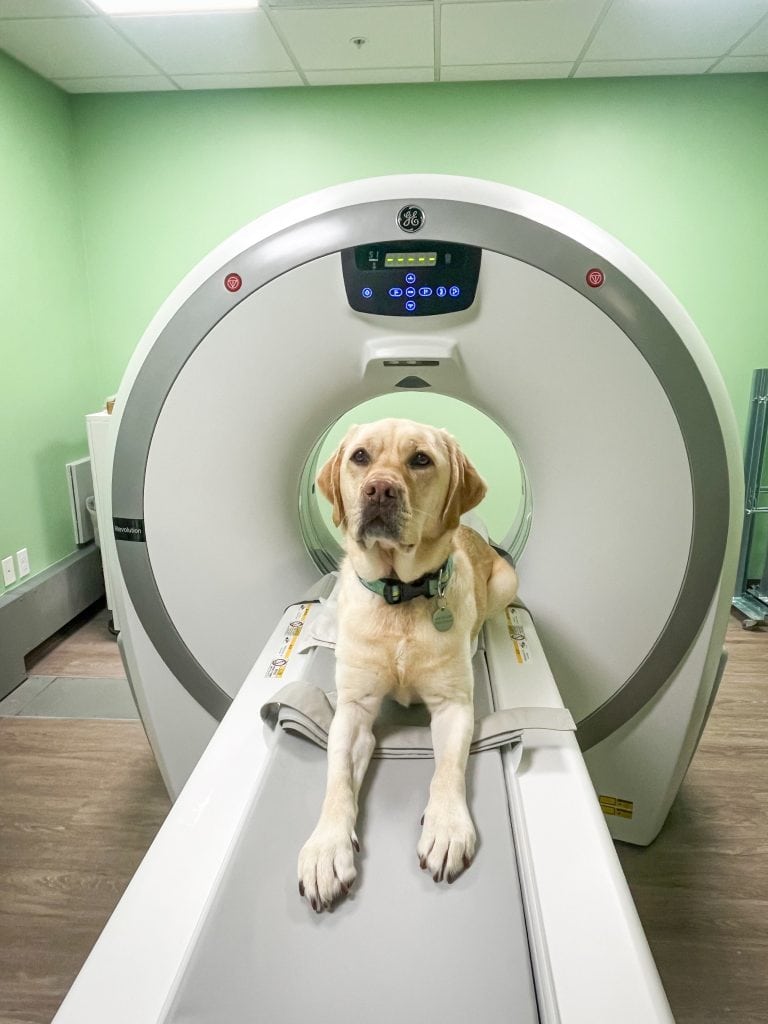

When your pet is not feeling their best, getting clear answers quickly is one of the most important parts of care. Two common diagnostic tools veterinarians use are X rays and CT scans. While they may seem similar, each offers unique benefits. Here is a simple breakdown to help you understand how they differ and when each one is best for your pet.
What Are X Rays?
X rays are one of the most frequently used imaging tools in veterinary medicine. They use a small amount of radiation to create a two dimensional image of the inside of your pet’s body.
They are:
-
Quick
-
Cost effective
-
Great for an initial look at bones, joints, and the chest
When We Recommend X Rays:
-
Suspected broken bones or fractures
-
Arthritis, joint concerns, or hip issues
-
Coughing, breathing problems, or heart concerns
-
Pre surgical or post surgical imaging
What Is a CT Scan?
A CT scan (computed tomography) provides a three dimensional, cross sectional view of your pet’s body. It takes multiple X ray images from different angles and compiles them into a detailed picture that allows us to see structures with much greater clarity.
This advanced imaging is ideal for areas that are difficult to evaluate with standard X rays due to overlapping tissues.
Safety and Comfort
Because pets must stay completely still, CT scans typically require sedation or anesthesia. Although CT uses more radiation than a single X ray, doses are carefully managed, and the diagnostic value is significant.
In some cases, a contrast dye may be used to highlight specific tissues and provide even more detail.
When Does a Pet Need a CT Scan?
A CT scan is often recommended when we need a clearer, more precise view than X rays can provide. It is especially helpful for:
1. Complex Bone or Joint Problems
-
Complicated fractures
-
Orthopedic surgical planning
-
Bone tumors or abnormalities
2. Nasal and Ear Conditions
-
Chronic nasal discharge
-
Sinus problems
-
Middle or inner ear disease
3. Cancer Detection and Surgical Planning
-
Locating and evaluating tumors
-
Determining if cancer has spread
-
Creating a targeted treatment plan
4. Trauma or Injury
-
Assessing internal damage after accidents
-
Quickly guiding emergency care
5. Neurological or Skull Related Conditions
-
Skull fractures
-
Issues involving bony structures of the head
-
Certain brain related concerns
CT Imaging at Island Life Animal Hospital
Our in house CT technology allows us to provide fast, advanced diagnostics without sending your pet to another facility. This means:
-
Quicker answers for urgent conditions
-
More accurate treatment plans
-
Less stress for pets and owners
Whether we are evaluating chronic concerns, investigating unexplained symptoms, or planning a surgical procedure, CT imaging gives us information that standard X rays cannot.
Is a CT Scan Right for Your Pet?
If your veterinarian recommends a CT scan, we are always happy to discuss why we believe it is the best choice. We will walk you through:
-
What the process looks like
-
Whether sedation will be needed
-
What we hope to learn from the images
-
How the results guide treatment
Our goal is to provide clarity and peace of mind while giving your pet the highest level of care.
If you think your pet may benefit from advanced imaging, or you would like more information about our CT capabilities, our team at Island Life Animal Hospital is here to help.

